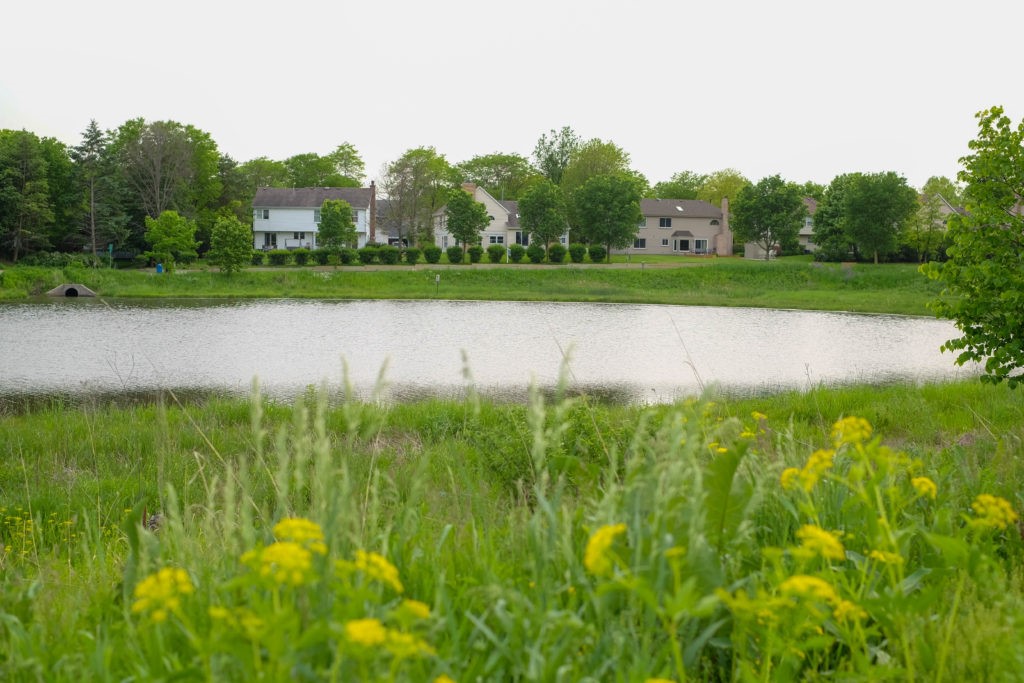

Many neighborhood ponds seem like a simple landscape feature, but they serve an important purpose. These ponds, called stormwater detention ponds or basins, are designed to capture and slow down rainwater, helping prevent flooding in streets and homes.
What many people don’t realize is that these ponds are not isolated. They’re part of a larger stormwater system that eventually drains into nearby creeks and rivers. Even if you don’t live next to a waterway, your everyday actions still influence the health of local rivers and streams through your neighborhood pond.
The Journey of Rainwater: How it Moves Through Detention Ponds
It starts with a single raindrop falling on your property. Ideally, that water would soak into the ground, but in many neighborhoods, compacted lawns and hard surfaces like driveways and sidewalks prevent water from seeping in. Instead, rainwater travels across the ground as stormwater runoff.
That runoff then flows into storm drains that carry it into your neighborhood detention pond. The pond collects rainwater across the subdivision and slowly releases it through an outlet structure. From here, the stormwater may travel through a chain of connected detention ponds in other neighborhoods. Eventually, it discharges into a local river or stream.
Stormwater is not treated like wastewater. That means whatever the runoff picks up along the way, like lawn fertilizer, pet waste, or litter, travels with it and ends up in the pond—and eventually, a waterway.
Signs of a Struggling Detention Pond

Stormwater ponds are designed to manage stormwater, but if not properly maintained, their effectiveness is limited. They also can quickly become an eyesore in the neighborhood. To ensure proper function, stormwater ponds should be checked regularly for the following potential issues:
Shoreline erosion
An eroding shoreline will have signs of an unstable bank, such as collapsing and loose soil around the shoreline. This is common when turfgrass is planted and mowed right up to the banks of the pond. As a result, erosion will create murky looking water and may fill in the pond, reducing its stormwater storage capacity.
A solution is to plant a buffer of deep-rooted native grasses and flowers around the shoreline. Native plants help secure the soil, beautify the pond, and provide habitat for birds, butterflies, and dragonflies.
Blocked inlet and outlet structures
Sediment, litter, and vegetation can accumulate and block inlet and outlet structures. Blockages slow or prevent the flow of water entering and leaving the pond, potentially leading to flooding. As part of their regular checks, HOA management should inspect these structures and remove anything blocking water flow.
Invasive species
Invasive species, such as phragmites, cattails, and reed canary grass, often grow in and around detention ponds. These invasive plants grow aggressively, filling in ponds and reducing stormwater storage capacity. They can also overtake beneficial native plants if not managed and removed.
Nutrient pollution
When stormwater runoff flows across lawns, it picks up fertilizer and brings it into the pond. Just like fertilizer feeds grass, it also feeds algae in ponds. That’s why it is common to see a mucky green layer on ponds in the summer.
Native plant buffers can reduce how much fertilizer reaches the water. They slow, absorb, and filter runoff before it enters the pond. Planting aquatic native plants in the pond can also improve water quality by absorbing excess nutrients, reducing the likelihood of harmful algal blooms. Smarter fertilizer use at home and on neighborhood community spaces can also help.

Healthier Stormwater Ponds
In addition to being functional, stormwater ponds can be beautiful amenities for the communities they serve if designed and maintained well. Healthy detention ponds are often “naturalized” with native plants lining the shoreline. These plantings help keep the water clean and improve the stormwater system.
With diverse plant life and cleaner water, stormwater ponds can even support wildlife, like dragonflies, frogs, birds, and pollinators. Just as importantly, they become a space for the community to enjoy. Instead of an overlooked or unattractive feature, a well-managed pond can be a scenic part of the neighborhood.
How to Help Your Neighborhood Pond and Local Waterway
The same actions that improve your neighborhood pond also help protect the stream or river it connects to. At home, simple habits can help make a difference:
- Do not dump anything into the detention pond or storm drain, including yard waste. Keep leaves and grass clippings out of the street and storm drains. Instead, participate in your community’s leaf and yard waste collection.
- Limit fertilizer and herbicide use to what is necessary, reducing usage if possible.
- Plant native flowers, grasses, shrubs, and trees that effectively soak up stormwater while providing wildlife habitat.
- Be responsible for picking up your pet’s waste so it is not carried away by runoff.
- Properly dispose of trash and recyclables. Avoid overfilling bins so trash does not escape. When taking walks around your neighborhood, consider picking up a piece of litter to prevent it from ending up in the detention pond.
Because these ponds collect runoff from many homes, meaningful change can happen when the community works together. At the community-scale, these actions can help:
- Talk to your HOA about planting a native plant buffer. A vegetative buffer of native plants around a detention basin can beautify your neighborhood while preventing pollutants from reaching the water.
- At minimum, keep grass long near the edge of the detention pond to reduce shoreline erosion.
- Organize a neighborhood litter clean-up to collect trash in streets, storm drains, parkways, ponds, and other shared spaces.
You may not live next to a river, but your detention pond connects you to one every time it rains. By taking small steps and home and working together as a community, we can create healthier neighborhood ponds and cleaner water that flows downstream.