Native plants are clean water allies. Native flowers, grasses, trees, and shrubs conserve and clean water while supporting local ecosystems at the same time! If you’d like to protect clean water in rivers, streams, and lakes landscaping with native plants helps in a few ways.
Native Plants Reduce Water Pollution from Stormwater Runoff
A main threat to clean water and healthy rivers is stormwater runoff. When it rains, water flows over roads and lawns, carrying along pollutants on the landscape like road salt, lawn chemicals, and litter that ultimately enter waterways through storm drains. Native plants offer a way to reduce stormwater runoff from homes and public spaces. Compared to turfgrass, native plants have deep roots that infiltrate rainwater into the ground. For example, the roots of the flower Compass Plant reach up to 15 feet deep into the soil! Therefore, a native plant garden has a remarkable capacity to absorb stormwater and direct it into the ground so it can refresh groundwater reserves. Pollutants are filtered out of stormwater as it moves through the roots and soil.
Homeowners and businesses can also create rain gardens, which are native gardens specifically designed to capture stormwater in a shallow basin and then infiltrate it into the ground. If you have issues with backyard flooding, a rain garden could be a great choice.

Native Plants Prevent Erosion
Fast-moving stormwater runoff can erode soil, especially on bare patches of ground and streambanks. When loose soil or sediment enters rivers in stormwater runoff, it makes the water murky, covers important streambed habitat, and can carry along harmful chemicals. Native plant gardens or buffer strips along streams also offer a solution for erosion. The same deep roots that soak up stormwater also hold soil in place. Native grasses and sedges with fibrous, net-like roots are particularly effective at stabilizing the soil.
Native Plants Don’t Require Fertilizer
Native plants are specifically adapted to our region’s climate and soil conditions. So, native plants rarely require fertilizer and pesticides when planted in conditions similar to their natural habitats. Less pesticide, herbicide, and fertilizer mean that less of those chemicals get washed into streams by stormwater runoff.
That being said, we have a variety of habitat types in Illinois, like prairies, woodlands, and wetlands. One species of native plant won’t thrive in every habitat. For instance, a shady woodland flower won’t fare well in a full-sun prairie restoration. For the best success and minimal maintenance, choose a native plant that is suited to the sun and soil conditions of your garden.

Native Plants Conserve Water
Still, many native plants are hardy and tolerate a range of weather conditions, from heavy rains to dry spells. As a result, established native plants don’t require regular watering and conserve water compared to traditional lawn and landscaping. Prairie plants with deep roots are able to reach groundwater deep in the soil, allowing them to survive dry periods.
While native plants need little supplemental watering, an extra drink is still helpful at times. During the first couple years, newly planted native gardens will need water, and mature plants will do better with watering during a drought. But on the whole, native landscaping significantly saves on water in comparison with traditionally landscaping.
BONUS: Native Plants Are Beautiful and Support Healthy Ecosystems
Native plants are an effective solution for managing stormwater and protecting clean water, but they also bring other benefits to your yard. For one, native flowers and grasses add lovely color and texture to your garden. Native, sun-loving flowers like butterfly milkweed, bee balm, coneflowers, blazing star, and goldenrods have colorful and showy blooms. Picking flowers with a variety of bloom times allows you to have color in your garden from late spring to fall. Flowers pair well with grasses and sedges that can add a mix of heights and texture to your landscaping.
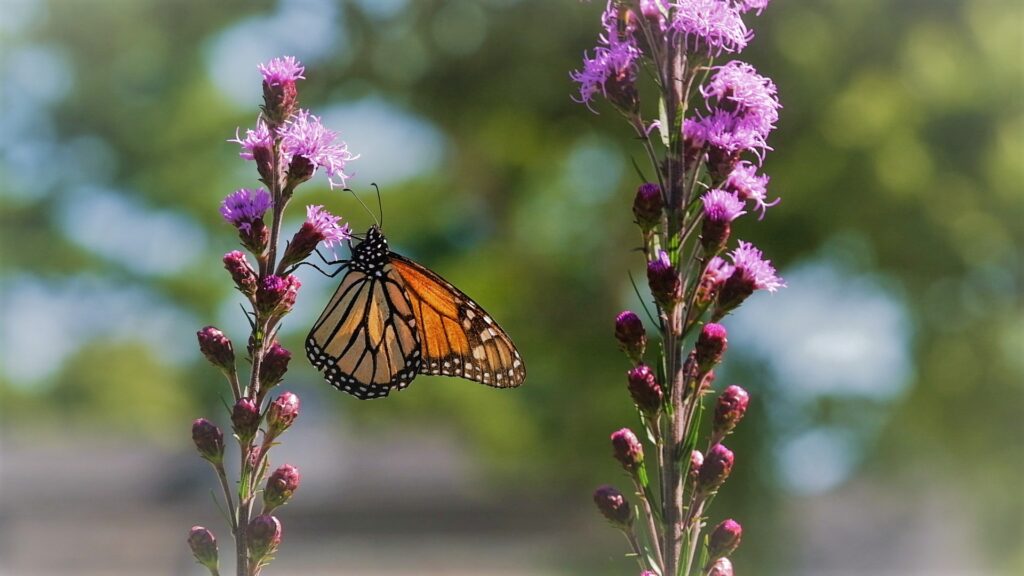
Being part of the natural habitat for thousands of years, native plants are foundational to a healthy local ecosystem. They provide essential food and habitat for pollinators, birds, and other wildlife. When you create a native plant garden, you’ll see many delightful visitors like monarch butterflies and ruby-throated hummingbirds. And so, native plantings offer a way to reclaim lost habitat and boost biodiversity in your neighborhood.
Native Plants for Healthy Rivers and Neighborhoods
Of course, you can always go all in on native landscaping, but adding native plants doesn’t have to be a big commitment. You can integrate native flowers into existing landscaping and replace struggling trees with a native tree like a white oak or eastern redbud. As these plants grow in, they’ll filter and conserve water, provide habitat for birds and butterflies, and beautify your home—a win for clean water, wildlife, and people!


