
Managing heavy rainfall and preventing flooding is a growing concern in many neighborhoods. With more surfaces covered in concrete and asphalt, water has less opportunity to soak into the ground. Instead, it runs off hard surfaces, causing problems like flooding and water pollution in local streams. Fortunately, trees can be a useful tool for addressing stormwater challenges, even in areas with limited green space. By slowing rainfall, absorbing water through their roots, and improving soil infiltration, trees offer an effective way to reduce runoff and flooding in our communities.

Why Stormwater Is an Issue
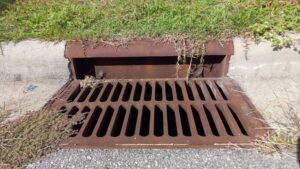
In natural, open spaces, rainwater is absorbed into the ground by soil and plants. But in developed areas, hard surfaces like roads, rooftops, and parking lots prevent that process. Instead of soaking in, rainwater flows over these surfaces and becomes stormwater runoff.
Stormwater runoff creates a couple problems:
- Flooding: Stormwater can pool on the surface and cause flooding in streets, yards, and homes.
- Water pollution: As it flows across the landscape, runoff picks up pollutants like litter, lawn fertilizer, road salt, pet waste, and car oil. These pollutants often wash into storm drains that lead directly to local rivers, streams, and lakes.
Too much runoff can block roads, damage property, and pollute waterways. So, managing stormwater runoff is important for protecting communities and the environment.
How Trees Manage Stormwater
Trees improve how water moves through the landscape in three key ways: slowing rain as it falls, soaking up water through their roots, and increasing infiltration into the soil.
Rain Hits Leaves First
Tree leaf canopies catch and hold rain. This process, called canopy interception, allows some rain to evaporate from its leaves. The rest of the water drips through at a much slower rate. Overall, the leaf canopy reduces the amount and speed of rainfall that eventually reaches the ground.
Roots Absorb Water
Between rains, tree roots soak up water from the soil. The water travels up through the trunk and branches and into the leaves where it is then released into the atmosphere through transpiration. This draws water out of the soil, making space for more rain to seep in during the next storm.
Roots Infiltrate Stormwater Into the Soil
Root systems create pathways in the soil that allow water to move deeper into the ground instead of running off. As stormwater soaks into the ground, tree roots and soil filter out pollutants. Trees and their roots are especially helpful for increasing infiltration in compacted urban soils.

Benefits of Using Trees for Stormwater Management
Trees provide a range of stormwater benefits, especially in cities and suburbs with limited open space.
- Reduce flooding: Since trees slow down rain as it filters through the leaf canopy, take up stormwater through its roots, and infiltrate water into the soil, they reduce the volume of runoff, resulting in less flooding in streets, yards, and homes.
- Improve water quality: Less runoff means fewer pollutants are washed into storm drains and local waterways.
- Recharge groundwater: Trees help to replenish groundwater resources as their deep roots guide stormwater downward into the soil.
- Optimize absorption capacity of limited open space: Open spaces allow rain to soak into the ground where it falls. Trees make the most of limited open space in cities and suburbs by aiding stormwater infiltration.
- Provide additional environmental benefits: Along with the positive impacts on stormwater, trees improve air quality, reduce the urban heat island effect, support local wildlife, and beautify our community.
Native Trees That Help Soak Up Stormwater
Any tree will help soak up stormwater, but some are better suited to local conditions. Here are a few tips for choosing the right tree for your yard:
- Prioritize native trees: Native trees are adapted to the local climate and tend to be hardier. In Illinois, native oaks, such as Bur Oak, Red Oak, and White Oak, are excellent stormwater trees due to their larger tree canopies and root systems. Oaks are also a keystone species, providing wildlife with essential food and habitat.
- Match the tree to the site: Consider your yard’s sun exposure, soil type, and space constraints. For wet or moist areas, Swamp White Oak and River Birch are great choices. Eastern redbud is a beautiful flowering tree that can tolerate partial shade. If you have limited space, you can choose from smaller trees and shrubs like pagoda dogwood and serviceberry.
- Aim for the best planting times: Spring and fall, with moderately warm days and cooler nights, are ideal for planting. Bare-root plants or trees that are slower to establish their roots will do better if planted in the spring, while trees and shrubs that are in pots or balled up in burlap can do well if planted in the spring or fall.

Trees for More Sustainable Neighborhoods
To sum it up, trees can play an important role in reducing stormwater runoff, especially in urban areas. They intercept rain through its leaf canopy, absorb water, and help it soak into the ground. At the same time, trees bring a wide range of additional benefits for people and the environment. By planting more trees, we can create greener, more flood-resilient neighborhoods.